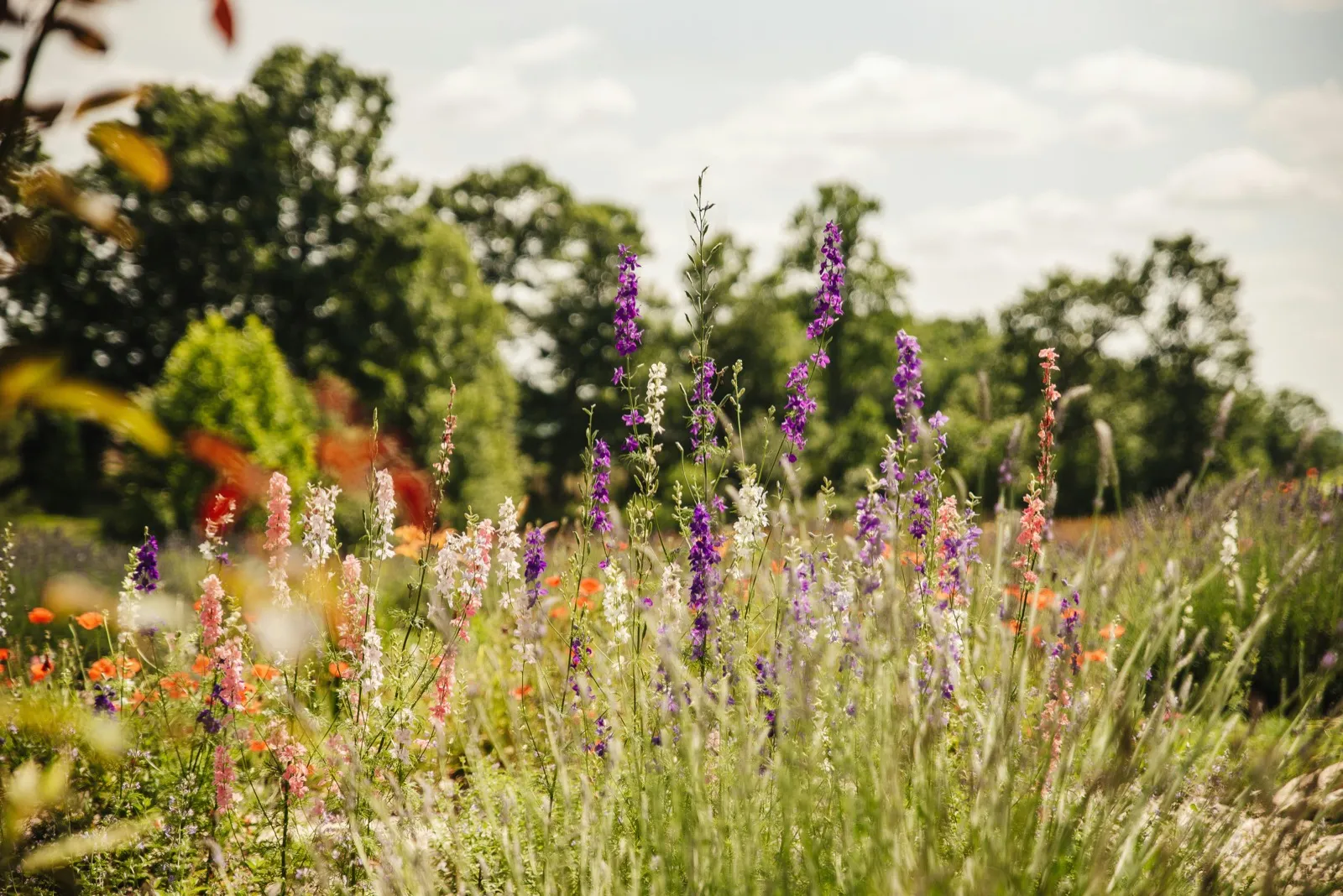
Flower Bed & Raised Bed Ideas for SE London
Sizing, depth, filling and layered planting for a bed that blooms all year. Built for heavy clay, no chemicals.
Sizing, depth, filling and layered planting for a bed that blooms all year. Built for heavy clay, no chemicals.
A flower bed is the part of the garden people look at most and get wrong most often. Whether it is a border cut into the lawn or a timber raised bed, the bed that disappoints is almost never short of plants. It is the wrong size, the wrong depth, badly filled, or planted for two weeks of summer and nothing else.
This guide is how we actually plan and plant flower beds and raised beds across South East London: getting the size and depth right, filling a raised bed so it lasts, and planting it so it looks good in every month on our heavy clay. No chemicals, and we will be honest about which parts are a planting job and which are simple DIY.
Before any planting, the first decision is whether you want a flower bed dug into the ground or a raised bed built above it. On the heavy clay across South East London this matters more than anywhere, and the Royal Horticultural Society guidance lines up with what we see on the ground. Weigh up:
Every idea below follows from that decision. The honest part: we are planting-led. We design the bed, get the size, depth, position and soil right, and plant it. We do not build the timber or brickwork itself; that is straightforward DIY or a carpenter, and we will always tell you which part is which.
The most common raised bed mistake we are called to rescue is filling it with bagged compost alone. It looks great for one season, then the organic matter rots down, the level drops by a third, plants sink, and you are topping it up every spring forever. The RHS is clear that a raised bed should be filled mainly with topsoil, with organic matter and grit blended in, precisely so it does not slump.
The other money-waster is planting it like a summer bedding display: a tray of annuals that look spectacular in July and bare by October, replaced at cost twice a year. We never use chemicals, and we never plant a bed that only works for a fortnight. A bed should be a permanent, layered scheme that earns its space all year.
Get the fill and the planting right once and a flower bed is a decade-long asset, not an annual expense.

The reason a planting plan is worth it is that a bed designed for your exact soil, depth and aspect performs for years with little input. Planting plans and bed design start at £39 online on our sister site gardendesignapp.ai, with bespoke plans from £500 priced to your garden, because a sunny raised bed and a shaded ground-level border need completely different soil and planting. Send us a few photos and rough measurements and we will design one that suits the bed you actually have.
Before any planting, your gardener Josh messages you on WhatsApp to understand where the bed is seen from, how much sun it really gets, and whether it is to be a raised bed or a ground-level border. The bed is then designed around your light, the clay and how you use the garden, not a generic template.
We are planting-led and never use chemicals, so weed control is dense planting and mulch. We design and plant the bed and source the right soil mix; we do not build the timber or brick structure itself. The twelve ideas below are what we come back to on flower beds and raised beds across South East London.
Each of these is part of how we plan and plant real beds across South East London. Use them yourself, or have us design and plant the scheme.
This decision shapes everything else. A ground-level flower bed is cheaper and looks more natural but means working with the existing clay. A raised bed gives instant good soil and better drainage on wet ground but costs more and dries faster. Choose deliberately rather than defaulting, because the planting and soil plan follow from it.
South East London soil is heavy clay everywhere. Where a bed sits in a wet, sticky, slow-draining spot, the RHS notes raised beds are a fast way to create impact, especially where the soil is poor. Rather than years of improving a waterlogged corner, a raised bed lets you garden in good soil from day one.
The RHS guidance is to keep a bed under about 1.5m wide so you can reach the centre without standing on the soil. Standing on bed soil compacts it, which on clay is exactly what you are trying to avoid. If you can only reach from one side, make it narrower still.
The RHS says 30cm is enough for dwarf bulbs and salad leaves, but most flowers and shrubs want 45cm or more. For a mixed flower bed we plan at least 45cm of good soil so roots have room and the bed holds moisture rather than baking out.
The RHS advises placing beds in the sunnier south- or west-facing parts of the garden, away from the shade of overhanging trees, and running long beds north to south for even light. If the only spot is shady, that is fine, but then the bed must be planted for shade rather than fought.
The RHS recommends a fill based mainly on topsoil with organic matter and some sharp sand, not pure compost, which slumps within a season. Getting the fill right once is what stops the annual sinking, topping up and disappointment that ruins most raised beds.
Treat a bed like a small border: structure plants first, then layers of height, with plants in odd-numbered groups repeated through it rather than dotted singly. A bed planted as one considered scene always reads better than a collection of single specimens.
The best beds have something looking good every month: bulbs and hellebores early, perennials through summer, grasses and seedheads into winter. Swapping a twice-a-year bedding routine for a permanent layered scheme is cheaper, less work, and far better looking for more of the year.
Bare soil between plants is a weed nursery. Planting at proper density closes the bed over so weeds have nowhere to start, which matters even more for us because we never use chemicals. A correctly dense bed is lower maintenance, not higher.
The RHS specifically recommends mulching the surface of beds to conserve moisture. A mulch layer cuts watering, suppresses weeds and, on ground-level beds, steadily improves the clay underneath. It is the single highest-value job you can do to a bed each year.
The RHS warns that raised beds suffer from drought more quickly and severely because of the better drainage. Plan for it: deeper soil, a good mulch, drought-tolerant choices in sunny raised beds, and easy access to water. A raised bed that bakes every July was planned without this in mind.
A flower bed is a brilliant place to feed pollinators and grow a few stems to cut. Single, nectar-rich flowers over a long season, some seedheads left standing and no chemicals turn an ornamental bed into a working wildlife feature that also looks generous and abundant.
Every garden across South East London, from Dulwich to Bromley, sits on heavy clay. For flower beds this is the single fact that should drive the decision. A ground-level bed on clay can be wonderful once the soil is improved with years of mulch, but it is slow. A raised bed sidesteps the wait.
Many SE London beds are also shaded by walls, fences and neighbouring trees. A bed in shade is not a failure, but it must be planted with shade-loving plants rather than the sun-lovers the pictures always show, or it will sulk whatever you spend on it.
We never treat soil type as a difference between areas here, because it is clay everywhere. The choice between a raised bed and an improved ground-level bed is almost always the real decision, not the postcode.
Be ready for this: a correctly planted new bed looks a little gappy for the first year. Plants are spaced to reach full size, so there is visible soil between them to begin with. It feels wrong but it is right.
Cramming a bed full so it looks instant is the single most common reason beds fail within two years: everything competes, plants go leggy, and you spend every season hacking back and replacing casualties. A bed planted at the proper density quietly fills its own gaps and looks better every year instead of worse.
So judge a bed in its second or third season, not its first summer. We mulch the open soil between young plants so it looks deliberate and stays weed-free while the planting knits together.
Plenty of this is doable yourself, especially building a simple timber raised bed, which is a genuinely satisfying weekend job. The hard part is the soil and plant decisions: the right fill so it does not slump, and a layered scheme that performs all year on SE London clay or shade. That is where a plan earns its money.
If you would rather it was designed and planted properly, that is what we do. Planting plans and bed design are bespoke, priced to your garden after a WhatsApp chat, the same named gardener each time, no chemicals, and your garden left tidier than we found it.
Your gardener Josh designs the bed around your soil, light and how you use the garden, gets the depth and fill right, and plants it as a layered scheme that works all year. From £39 online on our sister site gardendesignapp.ai, or bespoke from £500, because no two beds are the same.
A flower bed is planted directly into the ground. A raised bed is a contained bed of soil sitting above ground level, edged with timber, brick or stone. On the heavy clay across South East London a raised bed lets you garden in good soil straight away, while a flower bed means improving the existing clay over time. Both can look beautiful; it is a question of soil, drainage and how soon you want results.
The RHS guidance is that 30cm is enough for dwarf bulbs and salad leaves, but most flowers and shrubs want 45cm or more. For a mixed flower bed with perennials and small shrubs we plan for at least 45cm so roots have room and the bed does not dry out too quickly.
Narrow enough to reach the centre without standing on the soil. The RHS suggests under about 1.5m if you can only reach from one side, or a bit more if you can reach from both. Standing on bed soil compacts it, which on London clay is exactly what you are trying to avoid.
Not pure compost, which slumps badly within a season or two. The RHS recommends a mix based mainly on topsoil with organic matter and some sharp sand. We plan the fill so it holds structure and moisture for years rather than collapsing and needing topping up every spring.
We are planting-led: we design the bed, advise on size, depth and position, choose and source the soil mix, and plant it. We do not do the hard landscaping or carpentry, so the timber or brick structure itself is simple DIY or a job for a carpenter. We will always be honest about which part is which.
Planting plans and bed design start at £39 online on our sister site gardendesignapp.ai, with bespoke plans from £500 priced to your garden, because beds vary so much in size, depth and aspect. Message us on WhatsApp with a few photos and rough measurements and we will talk through what it needs and what it would cost, with no travel charges anywhere in South East London.
Autumn and spring are best, when the soil is warm and moist and roots establish before summer. A new raised bed can be filled and prepared at any time, so the sensible approach is to get it built and the plan agreed, then plant in the right window.
A ground-level bed lives or dies on the clay beneath it, so it is worth reading how to improve clay soil next, plus our garden border and edging ideas for planting it well. When you would like it designed and planted, see our planting plans service.
Send a few photos and rough measurements on WhatsApp and we will tell you honestly what your bed needs. Bespoke planting plans, no chemicals.