How to Create a Pollinator Garden
Twelve planting-led ideas to design a pollinator garden in South East London. Year-round flowers, single blooms, no chemicals.
Twelve planting-led ideas to design a pollinator garden in South East London. Year-round flowers, single blooms, no chemicals.
A pollinator garden is not a wildflower meadow or a patch of "leave it alone for the bees". It is a properly designed garden where every planting decision also feeds something. UK bees, butterflies and hoverflies have been in long decline, and the gardens around them have done a lot of the damage: lawns sprayed with weed killer, double-flowered bedding plants that produce almost no nectar, paving where there used to be soil. The fix is genuinely fixable, and it does not mean choosing between a beautiful garden and a wildlife one.
This guide is twelve pollinator garden ideas we use on real South East London gardens. They are RHS-aligned, all chemical-free, and built around plants that earn their place visually and ecologically. You can apply them yourself, or have us design and plant the whole thing.
Before any plant list, get these four right. The RHS Plants for Pollinators programme has been refined since 2011 and the headline guidance is consistent. Almost every pollinator garden that disappoints fails on one of these:
Get those four right and the design choices below all snap into focus. Get any one of them wrong and the rest barely matters: a year-round, single-flowered, chemical-free, mixed-origin garden is what genuinely feeds the insects. Everything else in this guide is a practical way to apply one of those four.
The most common mistake we see is the one-bee-friendly-plant-among-the-rest mistake. A lavender by the back door, a buddleia near the fence, and the rest of the garden carrying on as it was: a sprayed lawn, double-flowered bedding, paving where the soil used to be. The lavender does its bit for three weeks in July and then nothing else does much for the other forty-nine.
A pollinator garden is a whole-garden decision, not a corner. The lawn matters because mowing less and tolerating dandelions and clover feeds early spring bees. The borders matter because a tight, repeated planting of nectar-rich perennials feeds far more insects than a one-of-each muddle. The hard surfaces matter because every paved square metre is a square metre that grows no food.
The good news is that you do not need to dig everything up. Most pollinator gardens we build started as ordinary gardens, edited over one or two seasons: chemicals dropped, doubles swapped for singles, a few key plants added to fill the gaps in the flowering year. We never use chemicals, on any garden, ever, and a planting plan built around that single rule changes the whole place.
A pollinator garden is one of the fastest planting plans to show results. Even a small change, adding three or four well-chosen single-flowered perennials and dropping any chemicals, brings bees and hoverflies back inside the same season. Garden design and planting plans start at £39 online on our sister site gardendesignapp.ai, with bespoke plans from £500 priced to your garden, because no two SE London plots have the same light, soil and existing structure. Send us a few photos and we will tell you honestly what yours needs.
Before any planting, your gardener Josh messages you on WhatsApp to understand how the space actually works: where the sun hits and for how long, where it stays shaded, the soil (heavy clay everywhere in South East London), and what existing plants are worth keeping. Pollinator planting is matching plants to those conditions, not picking from a generic "best for bees" list.
From there it is a planting plan built around the flowering year, not a single season. The aim is something opening every month from February to October, with backbone plants repeated through the borders for visual rhythm and so the bees do not have to search for each meal. We are planting-led: planting design, borders, wildlife planting and ongoing maintenance, and never a chemical in the plan.
Here are the twelve ideas we come back to again and again on real South East London pollinator gardens.
Each one is something we use on real gardens, applied in the order they tend to matter. You can apply them yourself, or have us design and plant the whole thing.
The biggest change you can make. The RHS recommends aiming for plants in flower for as much of the year as possible. Map out the flowering year in months and check what opens in each one. Hellebores and snowdrops in February, crocus and pulmonaria in March, comfrey and aquilegia in April and May, then layer in lavender, marjoram, scabious and Verbena bonariensis through summer, sedums and asters in autumn, and ivy as the very last meal in October. A garden that only flowers in June is a June garden, not a pollinator one.
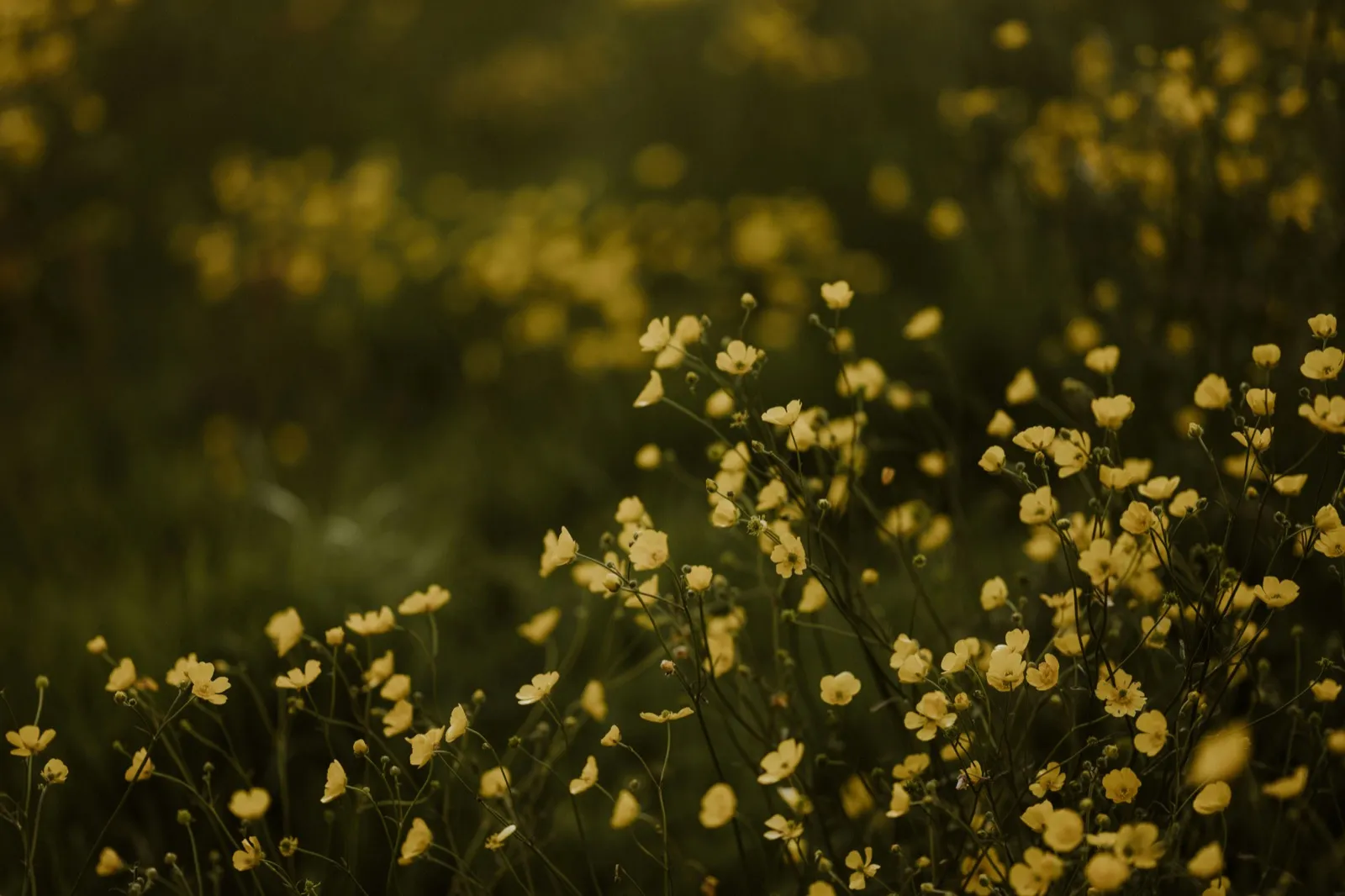
The RHS guidance is to choose simple, open, single flowers rather than complex double blooms. Doubles have so many extra petals that bees physically cannot reach the centre, and most produce far less pollen and nectar in the first place. A double dahlia is a deceptive thing in a pollinator border. The single equivalents, single dahlias, single roses, simple geraniums and erigeron, do the work.
One scabious is a snack. Five scabious in a drift is a meal worth flying to. Bees forage efficiently when the same flower is repeated, because they switch flower type less and pick up more pollen per visit. Repetition also looks calmer, which is the same advice we give for almost every border. Plant three, five or seven of each, in groups, not a one-of-everything scatter.
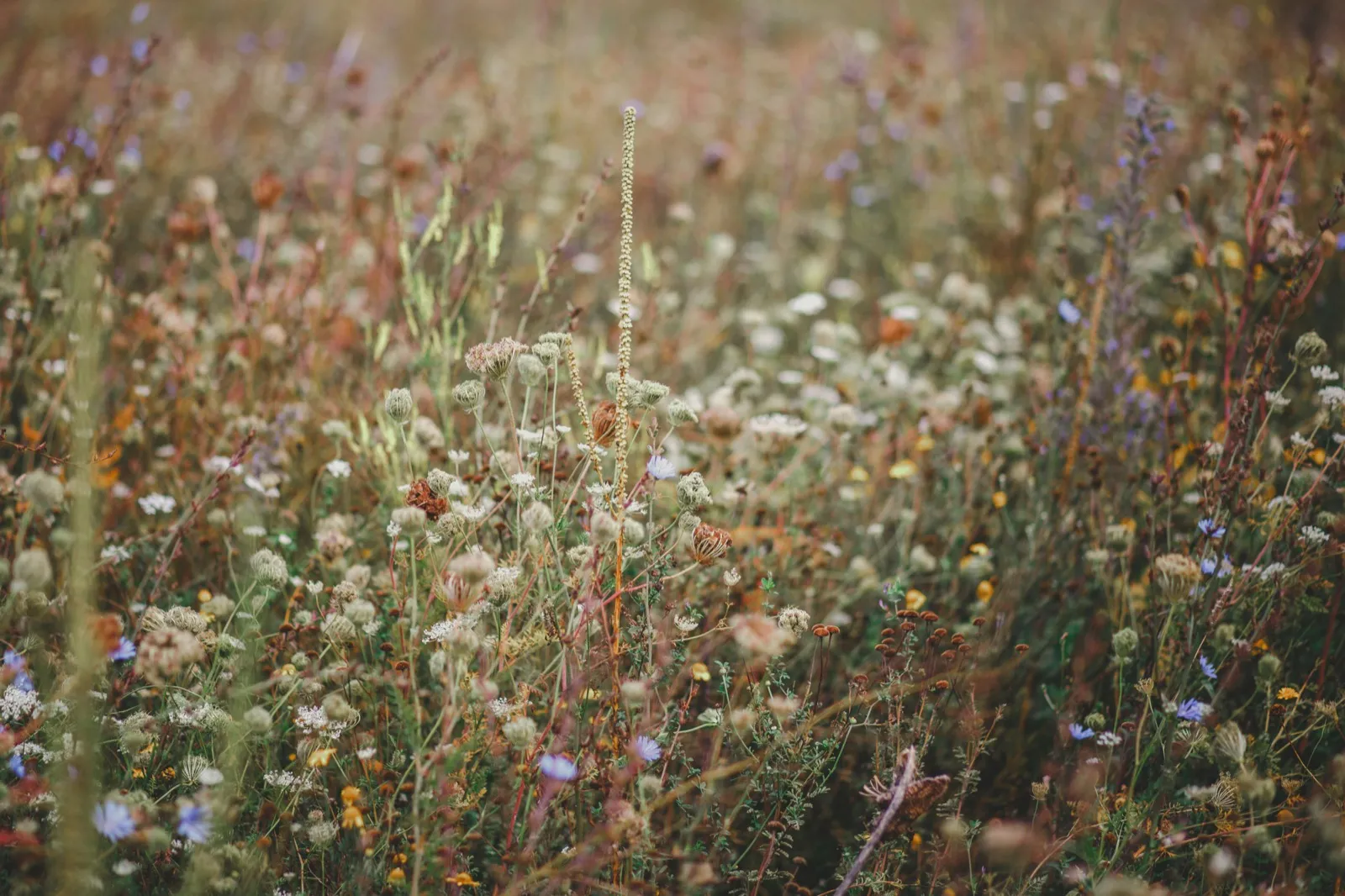
The RHS research is unusually clear here: the best pollinator strategy is a mix from different parts of the world, leaning more native than non-native, with exotic plants used to extend the season into late summer. A garden of only foxgloves, primroses, knapweed and field scabious flowers brilliantly in one short window. Add a few non-natives like Verbena bonariensis, sedum, salvia and ornamental marjoram and you push the food supply right through October.
This is the rule we will not move on. Pesticides, weed killers and slug pellets in a pollinator garden are a contradiction. Even targeted sprays drift and persist. The RHS specifically advises avoiding pesticides in your outdoor space. We never use chemicals, on any garden, ever, and you should not either. Mulch and dense planting handle most weed pressure. For slugs, plant copper-fenced raised beds for the vulnerable plants and accept some nibbling on the rest, see our guide on stopping slugs without chemicals.
Most of the UK's wild bee species are solitary, not honeybees, and many nest in bare, sun-warmed earth. The RHS specifically recommends a sunny patch of bare soil as a nesting site. It does not need to be big. A south-facing strip a metre square at the back of a border, left un-mulched and undisturbed, will house mining bees nobody else in your road is feeding.
Pollinators need to drink. The RHS suggests a pond with a beach-like edge or a shallow saucer with pebbles in it for the bees to land on. A full-on pond is a brilliant addition and we install them as part of wildlife garden projects, but a terracotta saucer of water and pebbles topped up weekly does the job in any size of garden.
Every pollinator garden needs at least one plant that flowers for months on end and pulls insects in from streets away. Our reliable thugs for SE London clay: Verbena bonariensis (June to October, attracts everything), marjoram (June to September, almost solid bee), single-flowered salvia like 'Caradonna' or 'Amistad', and lavender for the early-summer wave. Get one or two of these in every border and the garden never goes quiet between June and September.
A pile of logs in a shady, undisturbed corner is one of the highest-value habitat features per metre. It supports solitary bees, beetles and amphibians, and as the wood breaks down it feeds the soil. Use what comes out of your own garden when shrubs or trees are pruned. We build log piles into almost every maintenance visit because the raw material is already there.
The first warm week of spring is when the first bumblebee queens emerge, hungry, before most cultivated plants have opened. The RHS calls the dandelion an invaluable food source for many pollinators. Leaving the first few mows of the year, or simply mowing higher and less often through early spring, lets dandelions and clover provide that critical early meal. Resume normal mowing once the borders catch up.
Vertical growing space is free pollinator habitat. Star jasmine, honeysuckle, clematis and single-flowered climbing roses turn a flat boundary into a wall of nectar. Ivy in particular is undervalued: its October flowers are the last meal of the year for many pollinators and feed late-season bees and hoverflies, and the dense growth shelters overwintering insects.
The flowering year has two cliff edges: late February and late September. Plant winter-flowering bulbs like crocus, snowdrops and winter aconite in autumn for the early end, and asters, sedum, Japanese anemone and ivy for the late end. Many gardens have a beautiful June and then go quiet, and a few well-chosen plants at each cliff edge do more for pollinators than another half-dozen summer perennials.
The typical SE London plot is heavy clay, partly shaded by mature trees, neighbouring buildings or close-set fences, and somewhere between a Victorian terrace strip and a small back garden. That is brilliant for pollinators if you plant for the conditions rather than fighting them.
Clay holds moisture, so it suits the meaty perennials bees love: salvias, geraniums, knautia, sedums, alliums and Verbena bonariensis all do well on it once established. The shaded edges of SE London gardens are the right places for pulmonaria, foxgloves and bugle for early-season bumblebees. The sunnier walls and fences are climber territory for honeysuckle, jasmine and clematis. Our local network of parks, allotments and railway embankments means pollinators are travelling through every garden in Peckham, Brockley, Dulwich and Forest Hill, looking for food. A small, well-planted SE London garden plugs straight into that corridor.
The other thing to know is that planting is strongest in autumn and spring, when roots establish before summer demands kick in. So the sensible approach is to plan a pollinator garden now and put the plants in during the right window.
People assume turning a garden into a pollinator garden means clearing it and starting again. It almost never does. Most of the gardens we transform into proper pollinator habitats already had good bones, an established climber, a tree worth keeping, a shrub that just needed a different neighbour. The work is editing and adding, not demolition.
This is also where our plant rescue approach matters. Before anything is cleared we walk the garden and identify what is worth keeping, because in pollinator terms a mature lavender or an established honeysuckle is worth far more than a bare bed and three years of waiting. Clearing blindly is the expensive mistake.
So the honest expectation is this: in one season of editing, a typical SE London garden can go from feeding pollinators in one short window to feeding them from February to October. The hard year is the first one, while the new plants establish. After that it largely runs itself.
You can absolutely do a lot of this yourself, and we would rather you planted three good nectar perennials than nothing. The hardest part of a pollinator garden is not the planting, it is the choice: matching plants to your exact light and the clay, getting a flowering sequence that has no gaps, and avoiding the deceptive doubles that look right but feed nothing. Get those wrong and the garden looks pollinator-friendly without actually being one.
If you would rather it was designed properly, that is what we do. Garden design and planting plans start at £39 online on our sister site gardendesignapp.ai, with bespoke plans from £500 after a WhatsApp chat, because every plot is different. Same named gardener every visit, no chemicals, and your garden guaranteed to be tidier than we found it.
Your gardener Josh designs a pollinator garden around your light, the heavy London clay and the plants you already have, then plants it. From £39 online on our sister site gardendesignapp.ai, or bespoke from £500, because no two pollinator gardens are the same.
There is no single best plant. A real pollinator garden runs on a sequence of plants that flower one after another from February to October, so something is always in bloom. Reliable workhorses for SE London clay include hellebores and crocus in late winter, single-flowered geums and aquilegias in spring, lavender, marjoram and Verbena bonariensis through summer, and sedums, asters and ivy into autumn.
The RHS research is clear: the best strategy is a mix. They recommend planting more from Britain and the northern hemisphere than the southern hemisphere, with non-native plants used to extend the season, especially in late summer. A garden of only natives flowers for a short window, a garden of only exotics misses the species that evolved here, and a mix beats both.
Double flowers have so many extra petals that pollinators struggle to reach the pollen and nectar inside, and many double cultivars produce far less of either. The RHS specifically advises choosing simple, open, single flowers for pollinators. A double dahlia looks lovely but does almost nothing for a bee.
Not really. Bee hotels are popular but a sunny patch of bare, undisturbed soil supports more solitary bee species, costs nothing and needs no maintenance. The RHS suggests both, but bare soil and a log pile do most of the work. If you do use a bee hotel, keep it small and clean it out yearly to avoid mite build-up.
Only if you plant it like a wildflower meadow with no structure. We design pollinator gardens with the same eye for shape, colour and rhythm as any planting scheme. Repeated plants, a tight palette and a clear focal point keep it looking deliberate, while the nectar plants and one wild corner do the work for the bees.
Yes, and they punch above their weight. A small densely planted courtyard with no chemicals feeds more insects per square metre than a sprayed and slabbed half-acre. Climbers on the walls, a few big containers of lavender and salvias, and a shallow water dish are enough to bring bees and hoverflies in.
Pollinator garden design and planting plans start at £39 online on our sister site gardendesignapp.ai, with bespoke plans from £500 priced to your garden, because every plot has different light, soil and existing plants. Message us on WhatsApp with a few photos and we will tell you honestly what it would cost. No travel charges anywhere in South East London.
Pollinator planting is one part of a wider wildlife-friendly approach. See our guides on stopping slugs without chemicals and small garden planting ideas for more of the same approach in different settings. When you are ready to have it designed and planted, see our wildlife garden design service.
Send a few photos on WhatsApp and we will tell you honestly what your garden needs to feed bees, butterflies and hoverflies. Bespoke planting plans, no fixed package, no chemicals.