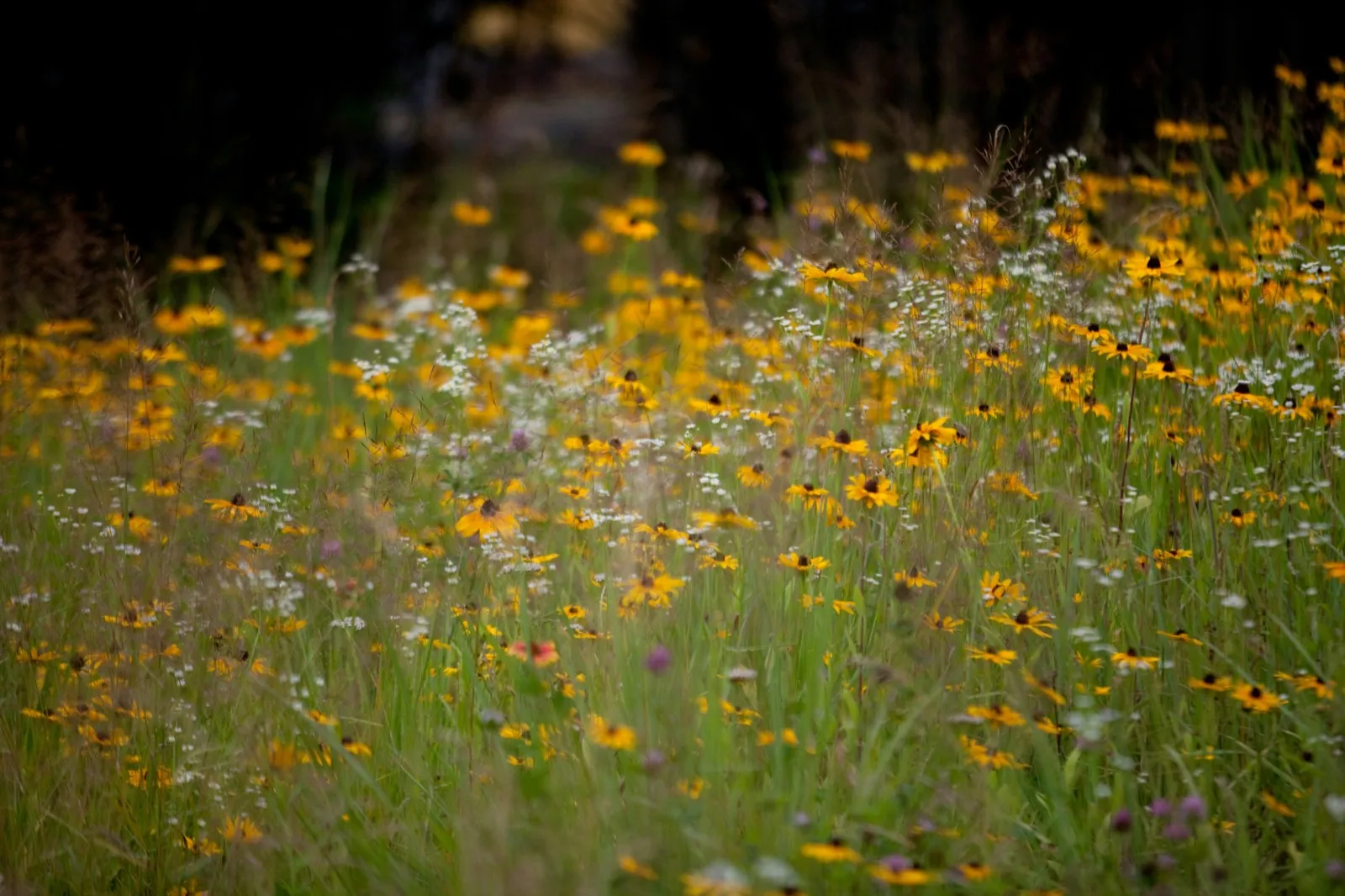
Cottage Garden Design Ideas
Twelve style-led ideas for the abundant cottage garden look in SE London. Layered planting, curving paths, romantic structure, no chemicals.
Twelve style-led ideas for the abundant cottage garden look in SE London. Layered planting, curving paths, romantic structure, no chemicals.
The cottage garden is the most requested style in our South East London maintenance visits, and it is genuinely one of the best matches for an urban back garden. Done well, it looks abundant and romantic and slightly chaotic, but it is actually a carefully planned style. The trick is in the layout, the proportions, the curve of the path and the calm structural frame around the planting, not just in which species you buy from the garden centre. A cottage garden built on plant choices alone always looks like a flower bed; one built on the design framework first looks like an actual cottage garden.
This guide is twelve cottage garden design ideas we use on real SE London plots. They are RHS-aligned, chemical-free, and shaped around the style itself rather than a plant list. For the species side of the brief, the cottage garden plants guide is the companion piece. The two work together.
The cottage garden is the trickiest style to pull off precisely because it looks so casual. The RHS cottage garden style guide says it best: "the planting style looks slightly chaotic, but is actually well planned out with harmonising colours and layers of texture." Four ingredients carry that planned-but-loose look:
Get those four right and the planting looks deliberately romantic. Miss any one of them and the same plants look untidy. Everything below is a practical way to apply one of those four ingredients on a real SE London plot.
The cottage garden mistake we are called in to undo most often is no structural frame. The owner has read the brief about romantic chaos and seventeen different perennials, planted everything they like, and ended up with a border that looks busy and unresolved. The plants are right, the look is wrong. Without a calm structural frame (a low hedge, a row of clipped evergreens, a tight colour palette, a strong edge to a path), the looseness reads as untended rather than designed.
The other mistake is over-using harsh, modern materials. Crisp grey porcelain paving, brand new fencing and sharp metal edging fight the cottage feel. The style needs weathered materials: old brick paths, gravel, worn stone, timber, anything that looks like it has been there a while. The planting then looks like it has grown into the materials over time, rather than been bought yesterday from a garden centre.
The third pitfall is reaching for chemicals when the romantic mess gets out of hand. A cottage garden inevitably gets self-seeders, slugs and weeds because the dense, soft look invites all of them. We never use chemicals, on any garden, ever. The honest answer is editing: lifting unwanted self-seeders by hand, mulching to suppress weeds, and accepting some slug nibbling on the plants that can handle it.

A cottage garden is one of the quickest styles to deliver because the framework can be drawn over an existing garden without ripping anything out. Bed lines redrawn, path curved, frame planted, the romantic planting layered on top. Garden design and planting plans start at £39 online on our sister site gardendesignapp.ai, with bespoke plans from £500. Send us a few photos on WhatsApp and we will tell you honestly what yours needs.
Before any planting, your gardener Josh messages you on WhatsApp to understand what your kind of cottage garden looks like: pastels or hot colours, neat-and-romantic or properly loose, fragrant or not. Cottage garden is a brief, not a recipe, and getting the brief right matters more than the plant list.
From there it is a planting plan and design built around your light, the heavy London clay and the existing structure. The frame goes in first (the path, the edge, any low hedge or evergreen backbone), then the layered planting on top. We are planting-led: planting design, borders, wildlife planting and ongoing maintenance. We do not lay decking, paving or fencing, so if your cottage garden needs new hard landscaping we will recommend you bring in a landscaper for that bit.
Here are the twelve cottage garden design ideas we come back to again and again on real SE London plots.
Each one is something we use on real SE London cottage gardens. You can apply them yourself, or have us design and plant the whole thing.
The single biggest visual change. A cottage border needs three or four layers of height working together: low ground cover at the front (hardy geraniums, alchemilla, lady's mantle), mid-height perennials in the middle (salvias, knautia, geums), tall spires at the back (foxgloves, delphiniums, hollyhocks), climbers rising above. A thin row of one-of-each plants will never look cottage no matter how many traditional species you put in it.
The defining detail. Hardy geraniums, alchemilla, lavender and creeping thyme should tumble over the path edge and partly hide it. A cottage border with a perfect crisp lawn edge looks municipal. The same border with planting flopping into it looks cottage. The RHS guidance specifically describes planting that spills onto narrow pathways as the look.
A straight path that shows you the whole garden at once is a corridor. A path that bends and partly hides the far end is a cottage path. Even a small kink halfway down gives the eye somewhere to wonder about. The RHS notes that twisting paths out of view evokes mystery and encourages exploration, and this is the cheapest design lever you have.
The material of the path matters as much as the shape of it. Reclaimed brick laid in a basket-weave or herringbone, pea shingle held by a brick edge, worn York stone or weathered concrete pavers all age into the planting. Crisp grey porcelain, sharp modern paving and brand-new fencing all fight the look. If you cannot replace existing hard surfaces, soften them with spilling planting.
Cottage gardens are layered upwards as well as outwards. A wrought-iron arch over the path with a climbing rose and clematis trained through it, an obelisk in the middle of a border carrying sweet peas, a small pergola over a bench, all add vertical layers to flatten the eye-level mass of planting. Without verticals a cottage border can feel like one big horizontal stripe.
This is the rule that holds the apparent chaos together. The RHS specifically calls out "harmonising colours and layers of texture" as the secret to the planned-but-loose look. Pick two or three closely related colours (soft pinks, mauves and whites; or hot pinks, reds and bronze foliage) and resist every garden-centre temptation to add one of everything. A restricted palette is what makes the looseness read as designed.
Cottage planting needs something to play against. A short box hedge along the front of the border, a row of clipped yew or hornbeam blocks, even a single neatly shaped specimen at each end gives the eye an order it can hold onto while the rest sprawls. The contrast between the tight frame and the loose planting is the whole trick.
The cottage look is half visual, half olfactory. Climbing roses, honeysuckle, jasmine, sweet peas and clematis on the fences, walls and arches deliver the scent that makes the garden feel romantic. A cottage garden without scent is a flower border. With scent, it is an experience.
The plants that knit the look together are the self-seeders that pop up where you did not plant them: aquilegias, foxgloves, Welsh poppies, erigeron, alchemilla, fennel. The RHS describes haphazard self-seeding as part of the look. Let them happen, then edit out the ones in the wrong place rather than weed them all out indiscriminately.
The RHS guidance is to put aromatic plants near paths so they release scent when brushed past. Lavender, catmint, salvias, rosemary, lemon balm and creeping thyme right at the path edge get touched as you walk, and the garden smells different every time you pass. Plants you cannot reach do not get appreciated the same way.
Every cottage garden needs a place to land. Not a furniture set, just one bench or chair tucked into the planting at the far end of the path, ideally under a climber or arch. That destination is what makes the garden feel inhabited, gives the path somewhere to go, and turns the whole garden into a small journey rather than a view from indoors.
A traditional cottage garden has at least one fruit tree, and a single dwarf apple, plum or pear earns its place in even the smallest SE London plot. It provides early blossom for pollinators, late fruit for you, and a single piece of structural canopy that anchors the rest of the planting. Pick a stepover or fan-trained form against a wall if floor space is tight.
The classic SE London cottage garden is a Victorian terrace strip turned inside out: a narrow brick path bending down the middle, deep planted borders on both long sides spilling onto the brick, scented climbers up the fences and walls, and one fruit tree or arch at the far end. It is one of the best styles for a long, narrow plot because the cottage rules (depth, layering, spillover, twist in the path) all suit the shape.
It also works brilliantly on shorter, squarer gardens common in Beckenham, Bromley and Catford, where the design can twist the central path off-axis and pile the deepest borders around the focal point. And in the courtyard plots of Peckham, Brockley and Forest Hill, a cottage style can shrink down to one wall of climbers, three big containers of cottage perennials, a brick floor and a single piece of vertical structure.
All sit on the same heavy London clay. Most traditional cottage plants like delphiniums, hollyhocks, foxgloves, geraniums and lavender thrive on improved clay, so the soil works in your favour here once it has been mulched a few times. Planting is strongest in autumn and spring, when roots establish before summer, so plan the cottage garden now and put the planting in during the right window.
People assume turning an ordinary garden into a cottage one means clearing it. It almost never does. Cottage is a style that can be layered onto an existing garden: borders deepened, a path softened with spilling planting, a low hedge added as the calm frame, climbers trained up existing fences. The bones stay, the feel transforms.
This is where our plant rescue approach matters. Before anything is cleared we walk the garden and identify what is worth keeping, because in cottage terms a mature shrub or established climber is worth far more than a bare bed and three years of waiting. Clearing blindly is the expensive mistake.
So the honest expectation is this: a typical SE London garden takes on a clear cottage character in one season once the framework goes in and the layered planting follows. The garden then deepens into the style over the next couple of years as the climbers fill in and the self-seeders settle.
You can absolutely take a run at this yourself, especially the climber-and-spillover work. The hardest part of a cottage garden is the editing: holding a tight colour palette when every garden centre temptation says otherwise, deciding which self-seeders stay and which lift out, knowing which plants to cut back when so the look stays loose without becoming messy. That is what separates a cottage garden from a hopeful jumble.
If you would rather it was designed properly, that is what we do. Garden design and planting plans start at £39 online on our sister site gardendesignapp.ai, with bespoke plans from £500 after a WhatsApp chat. Same named gardener every visit, no chemicals, and your garden guaranteed to be tidier than we found it.
Your gardener Josh designs a cottage garden around your light, the heavy London clay, the existing structure and your colour palette, then plants it. From £39 online on our sister site gardendesignapp.ai, or bespoke from £500, because every cottage garden is different.
A cottage garden is a style of garden that looks abundant, romantic and slightly chaotic but is actually planned. The RHS describes it as voluptuous planting and apparent informality held together by harmonising colours, layers of texture and a calm structural frame, usually a low hedge or some clipped evergreens. It is a style, not a plant list, and works on plots of every size.
Yes, and they often look better in a small plot than a large one. The cottage style is about density, and density reads as abundance in a small space. A narrow Victorian terrace strip with deep planted borders on both sides, a curving brick path down the middle and one small fruit tree at the end is a textbook urban cottage garden.
They look unkempt but are not actually low maintenance. The RHS notes that the planting style looks chaotic but is well planned. Cottage gardens need regular editing: deadheading, lifting self-seeded plants from where they would spoil the design, cutting back perennials at the right moment, and replacing short-lived plants like foxgloves every few years. Garden maintenance visits keep on top of that.
Cottage garden ideas (this guide) is the style and design, how the layout, paths, structure, colour palette and rhythm create the cottage look. Cottage garden plants is the species list, the specific plants used to fill it. The two work together: you need both the framework and the planting.
No. The cottage garden style is defined by how plants are arranged, not which plants. Traditional cottage plants like foxgloves, delphiniums, hollyhocks, roses and lavender are classics but the style works with any mix as long as it has layered height, scent, soft colours, and self-seeders woven through. The RHS lists ornamental grasses as a modern addition that brings movement.
Yes, almost automatically. The dense, single-flowered, scented planting that defines a cottage garden is also exactly what pollinators want. As long as you skip chemicals and include some long-flowering nectar plants, a cottage garden doubles as a pollinator garden and a wildlife corridor.
Cottage garden design and planting plans start at £39 online on our sister site gardendesignapp.ai, with bespoke plans from £500 priced to your garden, because every cottage garden is shaped by the existing structure, the light and the soil. Message us on WhatsApp with a few photos and we will tell you honestly what it would cost. No travel charges anywhere in South East London.
This is the cottage garden style and design framework. For the planting side, see our companion guides on small garden planting ideas and how to create a pollinator garden. When you are ready to have it designed and planted, see our planting plans and garden design service.
Send a few photos on WhatsApp and we will tell you honestly what your cottage garden needs. Bespoke design and planting, no fixed package, no chemicals.