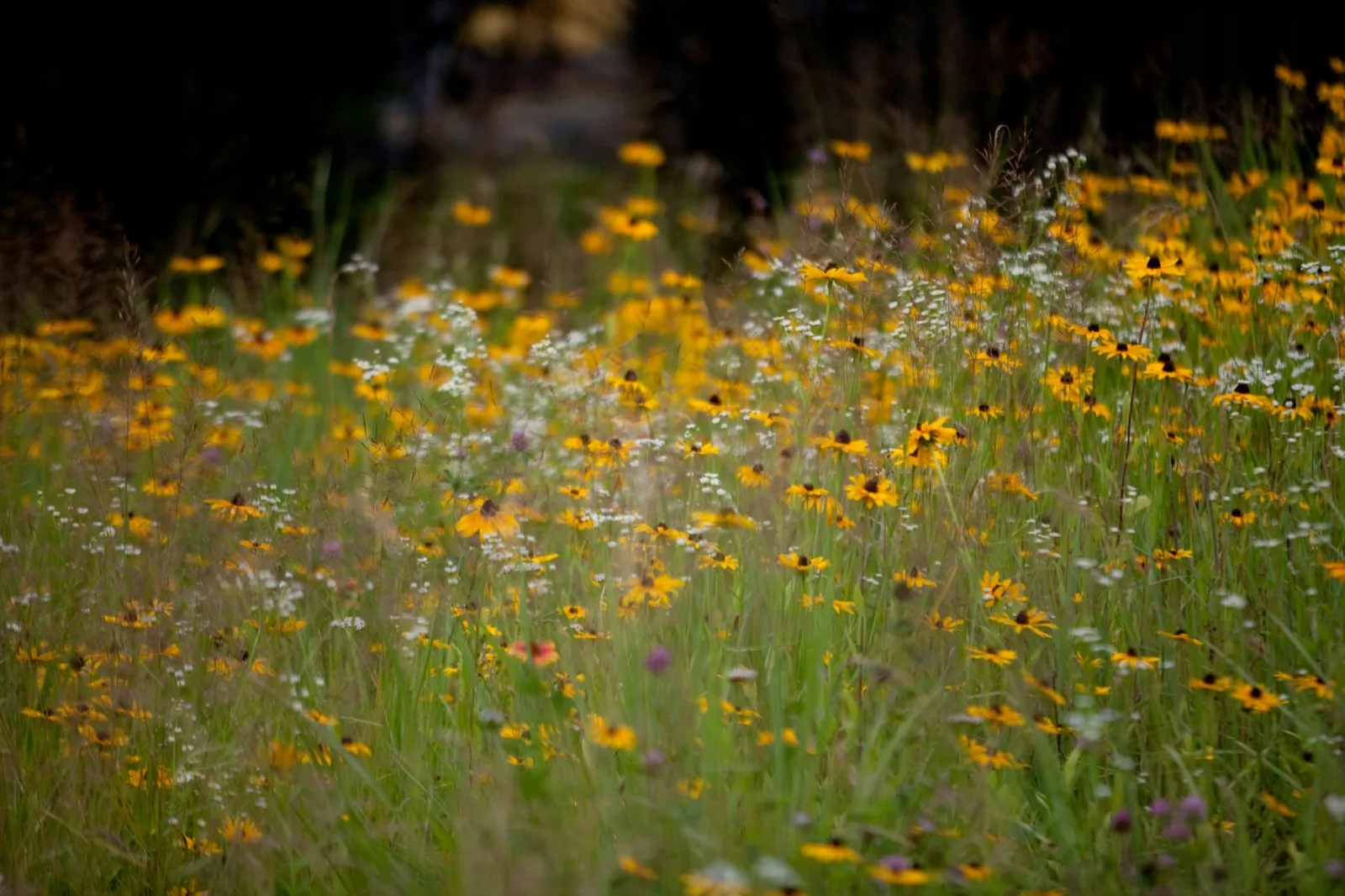
Weeds in Grass: Identify & Remove Them
Name the weeds in your lawn, take them out without chemicals, and build grass thick enough that they cannot come back.
Name the weeds in your lawn, take them out without chemicals, and build grass thick enough that they cannot come back.
A lawn full of daisies, dandelions, clover and flat rosettes of plantain is one of the most common things we are called to across South East London. Here is the part most advice misses: the weeds are not the real problem. They are a symptom of a lawn thin enough to let them in. Clear them without fixing that and they simply walk back in.
This guide names the weeds you are actually looking at, shows you how to take them out without a single chemical, and explains why the only thing that keeps a lawn weed-free for good is grass thick enough to leave them no room. It is the same approach we bring to weedy lawns across South East London every week.
Before you pull anything, work out what you have, because they do not all come out the same way. The Royal Horticultural Society names clover, daisies, dandelion, plantain, creeping buttercup, creeping cinquefoil, speedwell, yarrow, sheep's sorrel and coarse grasses as the usual lawn weeds. They fall into three groups:
Knowing the group tells you the action. But every one of them has the same thing in common: they only got in because the grass was thin enough to let them. That is the real target, and the rest of this guide is how you hit it.
The standard advice is a selective lawn weedkiller or a weed-and-feed. We never use either, on any lawn, ever. A weed-and-feed sprays a chemical across the entire lawn to kill a few plants, and it does not stop at the dandelions. We have watched a serious decline in insects and the birds that feed on them, and the routine spraying of lawns is very likely part of that story. A lawn is a small piece of habitat, not a problem to be sprayed.
The RHS is refreshingly blunt that no weedkiller is necessary, that getting rid of lawn weeds takes effort and is not actually essential, and that the easy option is to welcome many of them as wildflowers. It notes dandelions are a valuable early nectar source for bees and yarrow feeds 42 species of moth.
So there are two honest, chemical-free routes, and both are fine. Keep a pristine lawn by hand removal and thick grass, or lean into a clover-and-daisy lawn that hums with bees. What you do not need is the spray bottle.
There is no clever trick here, and that is the point. Levering weeds out by hand and thickening the grass is slower than a spray bottle and far more effective, because it removes the weed and closes the gap it came from. It is exactly the patient, no-chemical lawn work we do across South East London every week, and the reason those lawns stay good.
This is the idea the whole guide hangs on. Weeds do not invade a lawn, they colonise the gaps in it. A weed seed needs bare soil and light to get going. In a dense, vigorous lawn there is neither, so it never starts. In a thin, scalped, hungry lawn there is plenty of both, so it thrives.
That is why hand-pulling alone is a treadmill. Take a dandelion out and leave the bare patch, and you have made a perfect seedbed for the next weed. The RHS makes the same point: maintenance that builds dense, healthy grass is what makes it hard for weeds to establish in the first place.
So the method below is two things working together: remove what is there, and at the same time thicken the grass so the space does not exist for it to come back. One without the other is wasted effort.
This is the exact no-chemical process we use. You can do it yourself with a fork and some seed, or book us to do the whole thing in one visit.
Sort what you have into the three groups above: rosette and tap-rooted weeds, low creeping weeds, and coarse grass tufts. Each needs a slightly different action, and a few are worth keeping for the bees if you are open to it.
Lever individual dandelions, daisies and plantains out with a hand fork or daisy grubber, taking the whole tap root so they cannot regrow from the crown. The RHS lists this as the core non-chemical method, and on a small to medium lawn it genuinely works.
Before mowing, go over the lawn with a spring-tine rake to lift the low creeping stems of clover and speedwell up off the ground so the mower actually cuts them instead of gliding over the top. A simple step almost nobody does.
Take the heads off weed flowers, by mowing or by hand, before they set seed. Letting dandelions and daisies seed across your own lawn is quietly planting next year's problem.
Every weed you remove leaves a bare patch, which is a fresh seedbed for the next one. Oversow those gaps with pet and child friendly grass seed straight away so grass claims the space first.
Set the mower higher from now on. The RHS specifically recommends a higher cut to strengthen the grass. Longer grass shades out weed seedlings and stops the scalping that weakens turf in the first place.
The step that makes the rest last. A dense, well-fed lawn, kept thick with regular scarifying and overseeding, simply has no gaps for weeds to colonise. This is the only thing that turns a one-off clear-up into a lawn that stays clear.
Hand-pulling individual weeds can be done any time the soil is soft enough for the root to come out cleanly, which on South East London clay means after rain, not in a baked summer. Pull in a drought and the tap root snaps and the dandelion is back.
The thickening work, the part that actually keeps weeds out, is best in spring (March to April) and early autumn (September to October), when soil is warm and moist enough for overseeding to take fast. Get a clear-out and overseed done in one of those windows and the grass closes the gaps before the next weed flush.
The RHS frames lawn weed control as a spring, summer and autumn maintenance rhythm rather than a one-off. That matches what we see: a lawn looked after little and often stays ahead of weeds, a lawn left and then blitzed never does.
It is worth being straight about something people find hard to hear: a lawn that is half clover and daisies usually was not unlucky, it was thin. The weeds are the visible result of grass that has been scalped, starved or shaded for years. That is not a criticism, it is good news, because it means the fix is in your control.
It also means the honest expectation is not instant. Hand-pull and overseed and the lawn looks patchy for a few weeks while the new grass comes through, exactly as it should. What you are doing is swapping a weed-and-moss mat for real, dense grass, and that genuinely takes a season to settle.
The only real mistake is the common one: clearing the weeds and then doing nothing. Bare gaps do not stay bare. They grow the next weed. Clear, overseed, mow high, and the lawn tips from getting worse every year to getting better.
You can absolutely do this yourself, especially the hand weeding, which is oddly satisfying and needs nothing but a fork and patience. The part people underestimate is the thickening: matching the right seed to your light and soil, getting even coverage, and keeping the rhythm up so the grass actually wins. Do the weeding but skip that and you are back here next year.
If you would rather it was done properly in one go, we restore weedy, thin lawns across South East London in a single visit, the same named gardener every time, no chemicals ever, and your garden guaranteed to be tidier than we found it.
One visit, one fixed price, everything included. Your gardener Josh clears the worst, overseeds to thicken the grass, and sets the lawn on a path where weeds lose. The same named gardener every visit, never a chemical in sight.
The RHS names clover, daisies, dandelion, plantain, creeping buttercup, creeping cinquefoil, speedwell, yarrow, sheep's sorrel, dove's foot cranesbill, field wood-rush and coarse grasses. In South East London lawns we see daisy, dandelion, clover, plantain and creeping buttercup most, usually all at once in a thin or shaded lawn.
Hand remove the worst with a fork or daisy grubber taking the whole root, rake before mowing to lift creeping stems, deadhead before they seed, and then thicken the grass by overseeding and mowing higher. The RHS confirms this non-chemical approach works and that no weedkiller is necessary.
Largely, yes, and this is the key point. The RHS states that maintenance which encourages dense, healthy grass makes it much harder for weeds to establish and spread. Weeds colonise thin, weak or scalped lawns. Fix the grass and most of the weed problem fixes itself.
Only if you want to. The RHS points out many gardeners now deliberately choose clover or wildflower lawns, that dandelions are a valuable early nectar source for bees, and yarrow feeds 42 species of moth. We are happy to thin weeds from a lawn you want pristine, or work with a clover lawn if you would rather feed the wildlife.
Because the lawn is still thin enough to let them in. Pulling weeds without thickening the grass just clears space for the next ones, and mowing too short keeps the grass weak. The lasting fix is removing them and then building a dense lawn so there is no gap for weeds to colonise.
Yes. The RHS specifically recommends raising the mower height to strengthen the grass. Scalped grass is stressed and sparse, which is exactly the open, weak turf that weeds and moss exploit. A slightly longer lawn is a denser, more weed-resistant one.
Our all-in lawn restoration, which clears the worst and overseeds to thicken the grass in one visit, starts at £249 for a regular lawn and £349 for a large lawn, with no travel charges anywhere in South East London.
If the grass itself is thin and patchy, read our how to fix a patchy lawn guide. For what a restoration costs and what is included, see our lawn care prices guide.
Book online in 60 seconds. Instant confirmation, transparent pricing, no quotes needed.