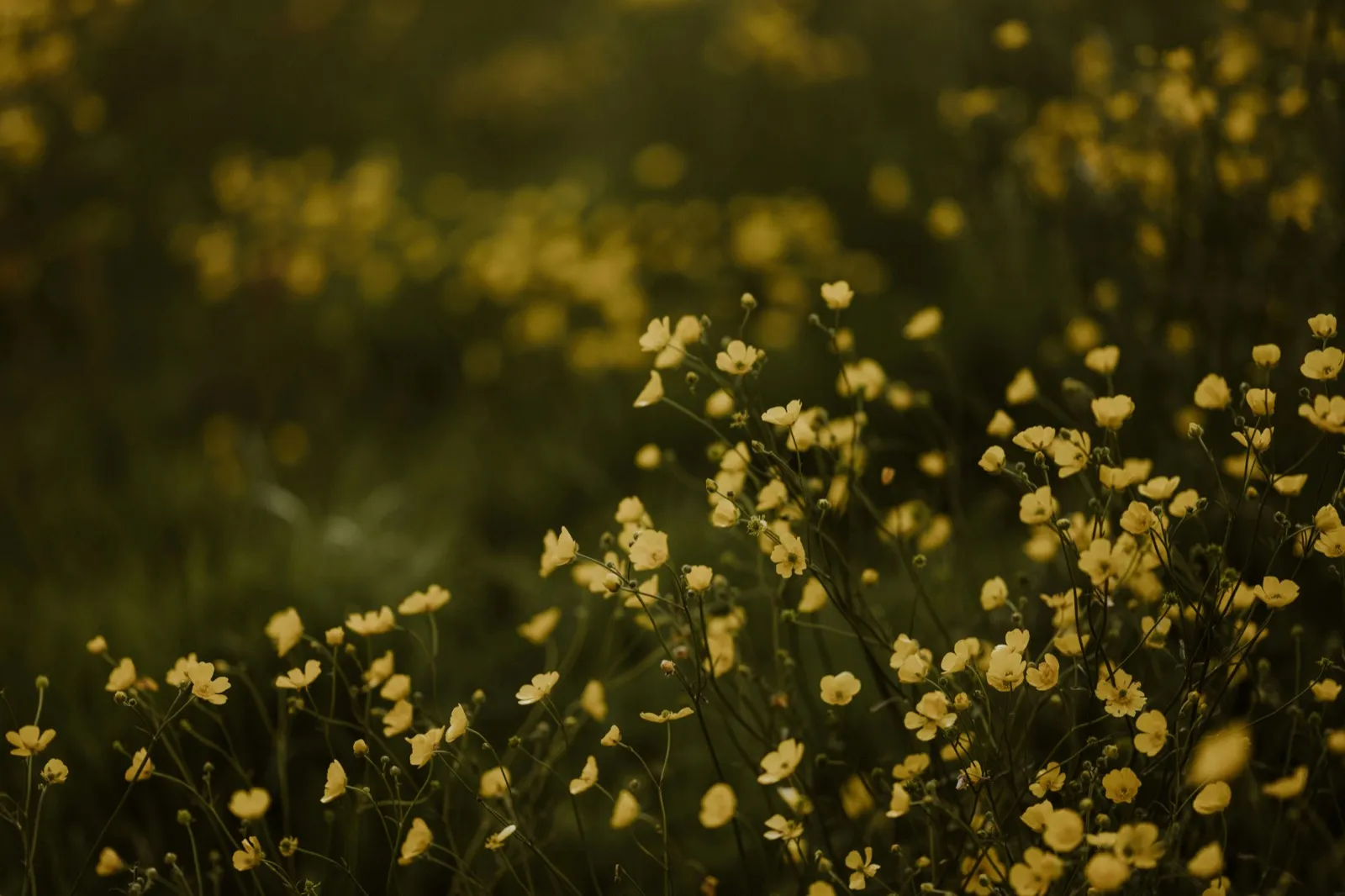
How to Create a Wildflower Meadow
The native species, the soil, the sowing window and yellow rattle. A practical UK meadow guide grounded in real SE London clay gardens.
The native species, the soil, the sowing window and yellow rattle. A practical UK meadow guide grounded in real SE London clay gardens.
A wildflower meadow is the single biggest thing a small garden can do for British wildlife. A tired lawn fed monthly is a green carpet. The same lawn, taken back to a meadow with native flowers and grasses, is somewhere bees nest, hoverflies feed, butterflies lay eggs and birds find seed late in the season. It is one of the few jobs that genuinely puts back more than you take out.
This guide is exactly how we do it, drawn from the Royal Horticultural Society's wildflower meadows guide and our own SE London conversions. The native species worth sowing, the timing the RHS recommends, the role of yellow rattle, and the once or twice a year of maintenance that keeps a meadow flowering for decades.
There is no single thing called a wildflower meadow. The RHS splits them into two very different types, and they need different soil, different seed and different upkeep. Picking the right one for your garden is the most important decision you will make:
The honest catch: every kind needs the soil to be lean, low in fertility, with the vigorous grasses kept in check. The RHS is firm on this point. Rich soil grows tall grass and nettles, not flowers. So whichever type you choose, the first piece of work is preparing the ground to suit a meadow rather than a lawn.
A conventional lawn that gets mown every week is one of the lowest-value habitats in a garden. The grass is kept too short to flower, the species mix is artificially narrow, and any meadow plant that tries to settle is cut off before it sets seed. Multiply that by every neighbouring garden and you have a landscape with almost no nectar in it.
A meadow is the opposite. Even a small one. Native wildflowers feed the specialist bees the country has been losing for decades; long grass shelters beetles and the small mammals that birds feed on; late seedheads in autumn carry finches and tits into winter. We never use chemicals on any garden, so a meadow corner becomes a chemical-free island of habitat in a sprayed neighbourhood.
The honest catch: a meadow is not a wildflower lawn you walk on. It is taller, looser, intentionally less tidy. Done well it looks deliberate and beautiful. Done badly it looks like a neglected lawn. The rest of this guide is how to do it well.
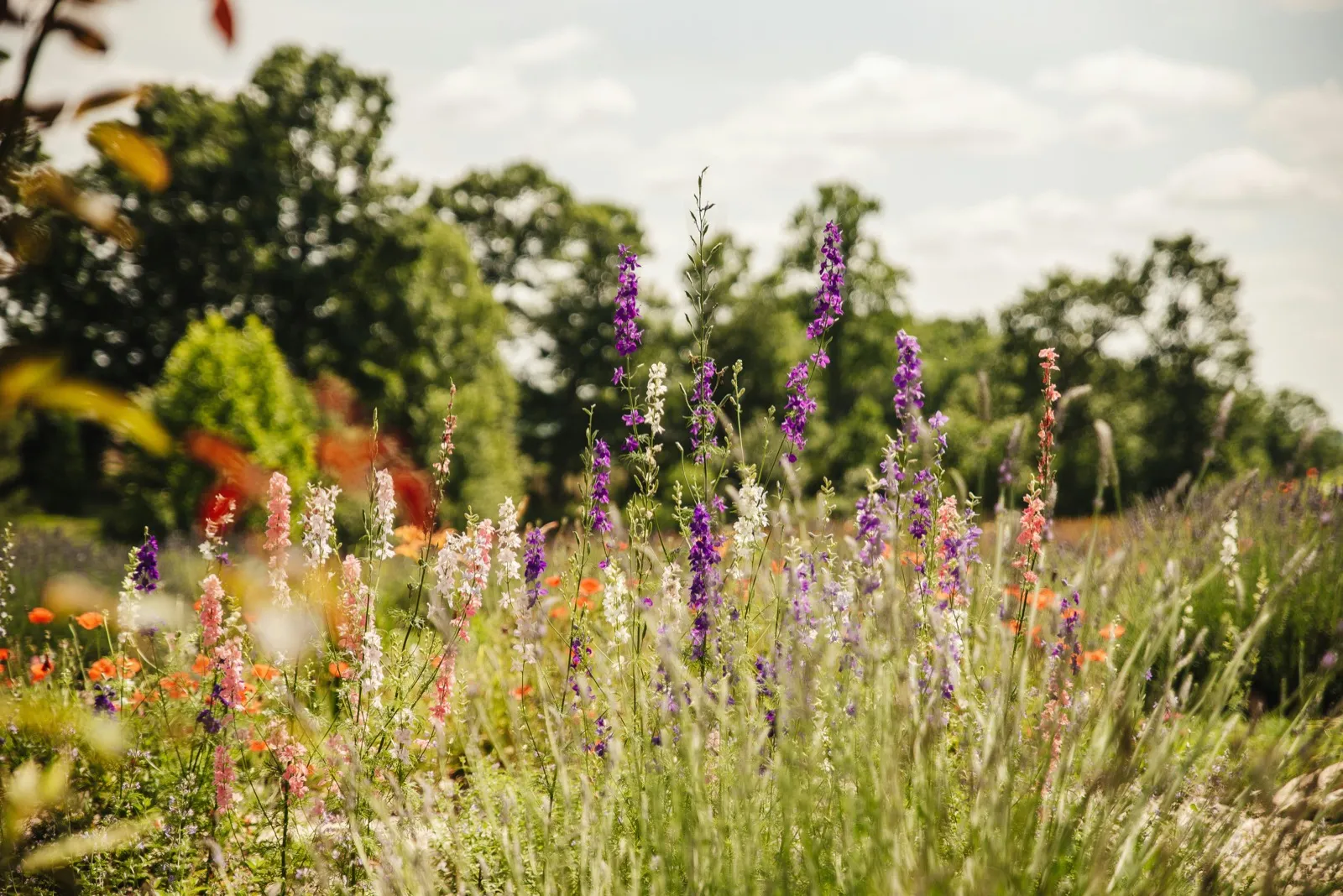
A wildflower meadow is one of our favourite garden design projects. We walk the patch with you on WhatsApp first, look at the light, the existing soil and how vigorous the grass is, then plan the meadow around what will actually establish. Meadow design and conversions are part of our standalone wildlife garden design work, priced bespoke to your garden, never a fixed package, because every patch is different. Send us a photo and we will tell you honestly what would work.
The list below is the workhorse mix for a UK perennial meadow with a few annuals woven in, drawn from the species the RHS names in its meadow guide. You do not need every one. A simple meadow can start with five or six of these and still feel rich. The right shortlist depends on your soil: damp London clay favours ragged robin, lady's smock and meadowsweet; drier sunny corners suit field scabious, knapweed and bird's-foot trefoil.
One species comes first regardless of soil though. Yellow rattle. Without it, the grass will dominate every other plant you sow. Sow yellow rattle in late summer or autumn directly onto short grass, then everything else has room to settle in around it. That is the single piece of advice that turns a struggling meadow into one that flowers.
Below are twelve native or near-native species worth planning around, with notes on what each brings to the meadow and which suit the heavy clay we work with across South East London.
Each of these is a species we plant or sow in real SE London meadows. We have noted what each one needs and what wildlife it brings in, so you can build a shortlist around your soil and aspect.
The keystone meadow plant. Yellow rattle is semi-parasitic on grass roots, which weakens vigorous grasses and lets the wildflowers compete. The RHS calls it "the most useful" species for converting a grassy area into a meadow. Sow seed in late summer or autumn onto grass that has been cut short. Without yellow rattle, almost every UK meadow conversion fails to a wall of grass within a year or two.
The classic UK meadow flower and the one that makes it read as a meadow at first glance. Tall white daisies on long stems, flowering June and July. Tough, drought-tolerant, copes with clay, and self-seeds reliably once it is in. We include ox-eye in almost every mix we sow.
The other workhorse perennial. Common knapweed is one of the best nectar plants in the British flora and feeds a long list of bees, butterflies and hoverflies through summer. Deep purple thistle-like flowerheads on tall wiry stems. Reliable on clay, holds its own against grass, late seedheads are gold for goldfinches.
Pale lilac pincushion flowers from June through to autumn. The RHS specialist-bee plant list highlights it: the small and large scabious mining bees both depend on it. Likes a sunnier, drier patch of the meadow but still copes with clay if drainage is reasonable.
One of the few meadow plants that tolerates light shade, which makes it ideal for the edges of a SE London meadow under a tree or beside a hedge. Pink-red flowers from late spring to autumn, an excellent moth and bee plant, and the seedheads are striking late into winter.
The wet-corner wildflower. If your meadow has a damp low spot, which heavy London clay often does, ragged robin will thrive where ox-eye sulks. Tatty-petalled pink flowers in late spring and summer that look exactly as their name suggests. Beautiful in a slightly wild way.
Also known as cuckoo flower because it flowers as the cuckoos arrive, lady's smock is the early-spring meadow plant that bridges the gap before the main summer show. Pale lilac four-petalled flowers, food plant of the orange-tip butterfly. Likes damp clay; an SE London favourite.
Treat these as a group. The RHS names all four as the classic annual meadow mix. Showy red, blue and yellow flowers in their first summer; they do not come back reliably without bare ground to germinate into. Use them to give a new perennial meadow a brilliant first year while the perennials root, then let them fade out as the perennials take over.
Low-growing, mat-forming, lilac-purple flowers from June to September. Selfheal is one of the species the RHS specifically lists for converting a closely mown lawn into a flowery meadow, because it copes with being short and still flowers. Plant it where the meadow meets a path.
A native legume that fixes nitrogen in the soil and supports bumblebees in serious numbers. The RHS bees research notes long-tongued bumblebees in particular depend on red clover. Sow sparingly in meadow mixes; it spreads quickly and can crowd weaker species if you over-do it.
Yellow pea-like flowers, sometimes called "eggs and bacon" for the reddish buds. It is the food plant of the common blue butterfly and feeds a long list of bees. Thrives on sunnier, drier patches with lean soil, which is exactly what a well-prepared meadow gives you.
The native ancestor of the carrot, with white lacy umbel flowers that look like cow parsley but flower later in summer. A magnet for hoverflies, soldier beetles and other beneficial insects. The seedheads dry into striking dark "bird's nest" cups that hold the structure of the meadow well into autumn.
The RHS guidance is clear: mid-spring (March to April) or early autumn (September) are the two sowing windows. Autumn sowings are often stronger because many native species need a cold winter to germinate well. Spring sowings work fine if you have missed autumn. Avoid sowing in the heat of summer or into waterlogged winter clay.
Cutting is the other half of the work. A perennial meadow is normally cut once or twice a year, with the cuttings raked off so they do not feed the soil. The main cut comes in late summer (late August to September) once the wildflowers have set seed, and a vigorous-grass meadow gets a second cut in spring (April) to take the lush early grass back. Yellow rattle gets sown into that short grass.
An annual cornfield meadow is different. You strip and re-sow it every year in autumn or early spring, on bare ground, so it can flower freshly each summer. There is no "low-mow" version of an annual mix that works.
This is the part the glossy garden-centre packets do not tell you. A perennial meadow in its first year is mostly green. The grasses come up first, the perennial wildflowers are putting roots down, and only the annuals you have woven in will give real colour. People expect a Monet painting in July and panic when it looks like long grass with a few daisies in it.
Year two is when the meadow starts to find itself. Ox-eye daisies, knapweed, scabious and red clover come up properly. Yellow rattle does its job and the grass thins. By year three the meadow is genuinely a meadow, full of flowers from May to September, with structure right through winter.
The most common mistake we see is people losing their nerve in year one and mowing the meadow back to a lawn. Hold the line. Cut it once in late summer, rake off the cuttings, and let it run again. Three years of patience is the price of a meadow that lasts decades.
You can absolutely sow a small meadow patch yourself, and we would rather you tried than not at all. The honest catch is the ground prep. Most failed meadows are not failed because of the seed; they are failed because the soil was too rich, or the existing grass was not broken up, or yellow rattle was never introduced. Get those three right and almost any seed mix will work.
We do meadow conversions in South East London as part of our wildlife garden design service, priced bespoke to your garden. We handle the ground preparation, choose the species mix for your light and soil, sow at the right time of year, and come back to do the late-summer cut so the meadow keeps going. Same named gardener every visit, no chemicals, and a meadow that ages into something genuinely beautiful.
A meadow conversion is one of the most satisfying jobs we do. Your gardener Josh prepares the ground, chooses the species mix for your soil and light, sows at the right time, and comes back for the late-summer cut. Bespoke and priced to your garden, never a fixed package, because every meadow patch is different.
Yes. A wildflower meadow does not need a field; even a small SE London back garden can have a meadow corner or a mini-meadow strip. The RHS describes wildflower meadow ideas for ordinary domestic gardens and the same techniques scale down. A wildflower patch a few square metres in size is still a real piece of habitat.
The RHS recommends sowing in mid-spring (March or April) or early autumn (September). Autumn sowings give native species the cold winter they often need to germinate well. Spring is fine if you have missed the autumn window. Avoid sowing in the heat of summer or in waterlogged winter ground.
Yellow rattle (Rhinanthus minor) is the most important plant in a UK meadow. It is semi-parasitic on grass roots, which weakens the vigorous grasses that otherwise crowd wildflowers out. The RHS calls it "the most useful" species for converting a grass-dominant area into a meadow. Scatter the seed onto short grass in late summer or autumn.
Yes. The RHS is clear about this: wildflower meadows want low fertility. Rich soil grows vigorous grasses and a handful of nettles, which crowd out the wildflowers. On heavy London clay we often remove the top layer or grow a green manure first to reduce fertility before sowing, then sow into a clean, raked-fine seedbed.
Annual cornfield-style meadows are re-sown each year. Perennial meadows are cut once or twice a year, with the cuttings removed to keep the fertility low. The RHS guides specific timings: a spring cut for vigorous-grass meadows, then a main cut in late summer once the wildflowers have set seed. The cut material is raked off so it does not feed the soil.
Yes, and it is one of the most rewarding conversions we do in South East London. There are two routes: introduce yellow rattle and let it weaken the grass over a few years, then plug-plant or oversow native wildflowers; or strip the existing turf entirely, reduce the soil fertility, and sow a meadow mix from scratch. The route depends on your patience and how much of the lawn you want to convert.
Yes. Meadow conversions are one of our standalone wildlife garden design projects, alongside ponds and dedicated wild corners. They are priced bespoke to your garden because the work depends on the size of the area, the existing soil and how much of the conversion you want done in one go. Message us on WhatsApp with a photo and we will talk through what is possible, with no travel charges anywhere in South East London.
A meadow is one piece of a wildlife-friendly garden. For the pollinator plants that pair with it, see our best bee-friendly plants UK guide. For the wider design service that includes meadow conversions, ponds and wild corners, visit our wildlife garden service page.
Send a photo of the patch on WhatsApp and we will tell you honestly what kind of meadow it could become. Bespoke design, no fixed package, no chemicals.