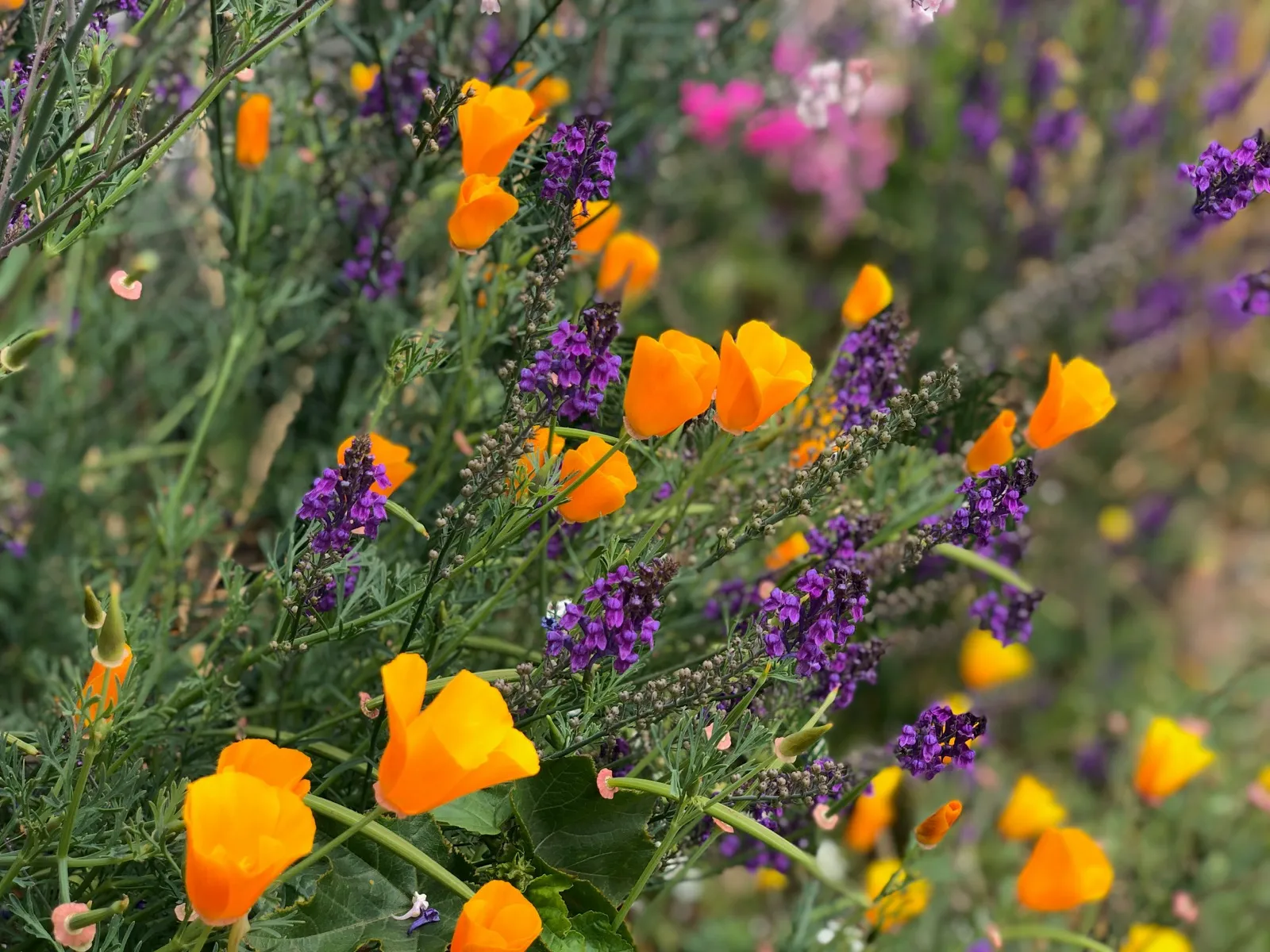
How to Make a Butterfly Garden
Twelve design ideas with real UK butterflies, RHS-named nectar plants and caterpillar food plants. Brimstones in March, Red Admirals in October.
Twelve design ideas with real UK butterflies, RHS-named nectar plants and caterpillar food plants. Brimstones in March, Red Admirals in October.
A butterfly garden is one of the most satisfying things you can plant. There is a particular feeling when the first Peacock of the year drops onto a buddleia you put in two summers ago, or the moment you spot a Brimstone working its way down a row of lavender. The RHS notes there are nearly 60 butterfly species in Britain, and gardens are where most people see them. With the right planting, a tiny South East London garden becomes a stop on their route, and with a bit more thought it becomes a place they actually breed.
This guide is twelve butterfly garden ideas we use on real SE London gardens. They are RHS-aligned, built around actual UK butterfly species and the plants their caterpillars and adults need, and fully chemical-free. You can apply them yourself, or have us design and plant the whole thing.
A garden with a buddleia and a packet of meadow seed will get the occasional visiting butterfly. A garden that actually holds them, and breeds them, has four things working at once. The RHS butterfly garden guidance hits the same points:
Get those four right and the garden does the rest. A working butterfly garden has nectar bright enough to pull adults in from the surrounding streets, and the right host plants tucked behind it so they have somewhere to lay. Without the host plants, you have a feeding station. With them, you have an actual habitat. The rest of this guide is twelve ways to apply that.
The biggest mistake we see in butterfly gardens is going all in on nectar and forgetting host plants. A row of buddleia and lavender along a fence, plenty of summer flowers, and not a single plant a caterpillar can actually eat. The garden looks the part, the adults visit, and the population never grows. The butterflies go off to lay their eggs somewhere else, and you have built a fast-food stop rather than a home.
The fix is small and undramatic: a patch of nettles tucked in a sunny corner for Peacock, Small Tortoiseshell, Red Admiral and Comma caterpillars; holly and ivy near each other for Holly Blue; a small area of grass left long for Speckled Wood and Gatekeeper; nasturtiums (and yes, the occasional munched cabbage) for the Whites. None of it is decorative powerhouse stuff. All of it is what turns a flower bed into a population.
The other thing to be straight about is chemicals. We never use chemicals, on any garden, ever, and in a butterfly garden this matters more than anywhere else. A single garden chemical, even one applied for slugs or weeds, kills caterpillars before they pupate. The whole point is to be the safe garden on your road, not a poisoned one.
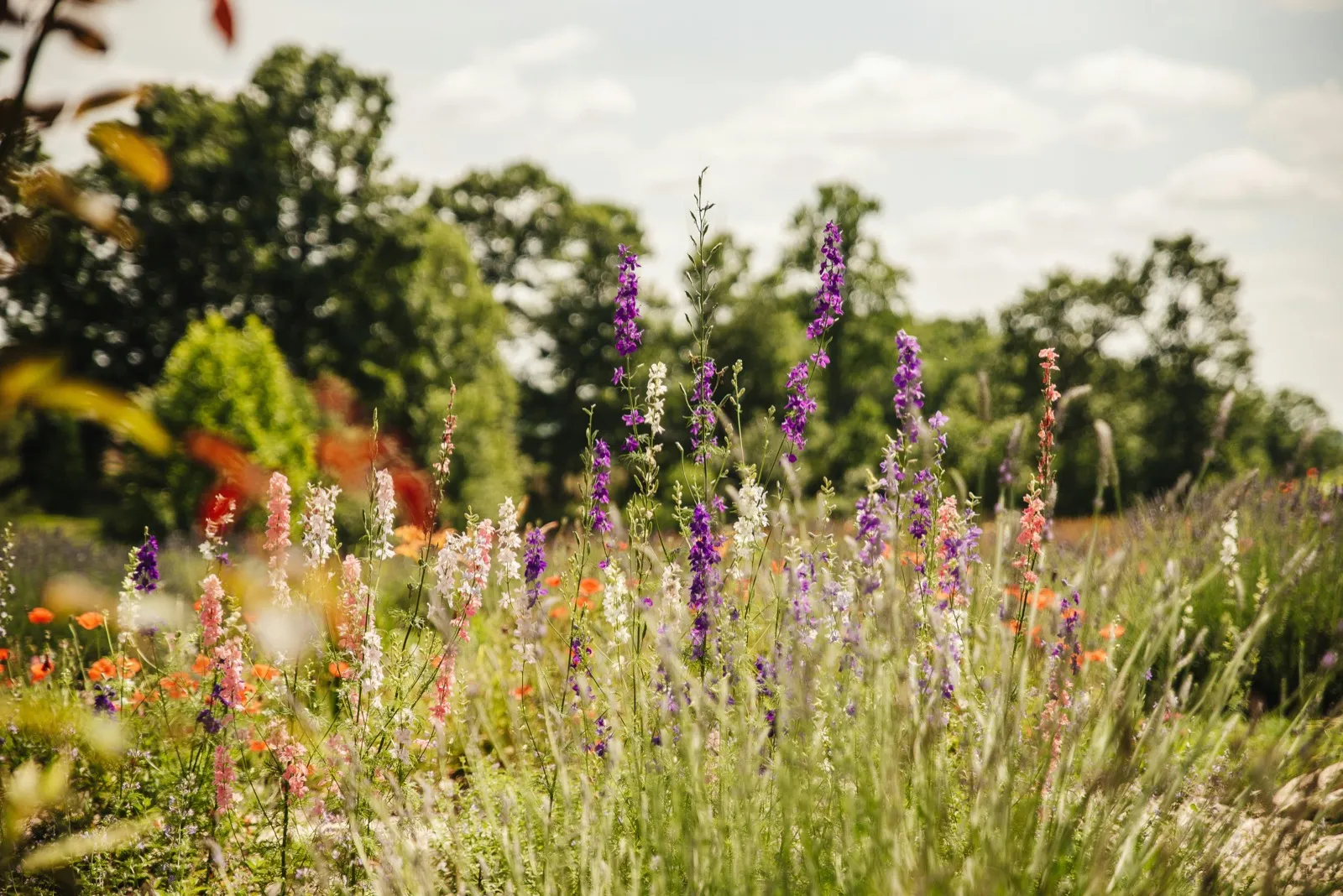
A butterfly garden has to be designed for the butterflies that already pass through your postcode, not a generic list. Your gardener Josh designs the planting around the sun your garden gets, the SE London species on the wing, and the host plants those species actually need. Planting plans from £39 online on our sister site gardendesignapp.ai, bespoke from £500. Send us a few photos on WhatsApp and we will tell you honestly what yours needs.
Before any planting, your gardener Josh messages you on WhatsApp to understand the garden: where the sun lands and for how long, what is already growing, whether there is room for a small wild corner of nettles, and which butterflies you have seen already. A butterfly garden built around the actual species on your street works far harder than one built from a generic list.
From there it is a planting plan built around the four principles: a sunny nectar bed, host plants behind it for breeding, the full flowering year from March to October, and absolutely no chemicals. We are planting-led: planting design, borders, wildlife planting and ongoing maintenance, and never a chemical in the plan.
Here are the twelve ideas we come back to again and again on SE London butterfly gardens.
Each one is something we use on real gardens. You can apply them yourself, or have us design and plant the whole thing.
The species you can reasonably plan around in our area are Peacock, Small Tortoiseshell, Red Admiral, Comma, Brimstone, Holly Blue, Large White, Small White, Speckled Wood and Gatekeeper. Each has different nectar and host preferences. Start by watching what already passes through for two weeks and design for those, not for tropical species you have seen on the internet.
The single most important design decision. Butterflies need direct sun to warm up enough to fly, and they avoid wind, which is why a south-facing border tucked against a warm wall outperforms a flat open bed twice its size. The RHS guidance starts with the same point: a sunny spot is the foundation of a butterfly garden.
Yes, the common name is earned. The RHS specifically lists Buddleja davidii as a shrubby butterfly favourite, alongside lavender and holly. One well-placed buddleia is the single best adult nectar shrub you can plant, especially for Peacock, Small Tortoiseshell and Red Admiral. Cut it hard back each March to keep it flowering low where you can see it.
If the buddleia is the heavyweight, these three are the dependable mid-cards. Verbena bonariensis flowers June to October and attracts almost every garden species. Lavender peaks in July when activity is highest. Marjoram is unfussy and stays in flower for months. The RHS lists Verbena bonariensis and lavender as core butterfly nectar plants. Plant them in drifts of three or five, not single specimens.
The line that separates a feeding station from a real butterfly garden. Without host plants, you are running a fast-food stop. The basics for SE London are nettles for Peacock, Small Tortoiseshell, Red Admiral and Comma, holly and ivy for Holly Blue, long grass for Speckled Wood and Gatekeeper, and nasturtiums (which the Whites eat enthusiastically) if you can tolerate the nibbling. Most are easy to tuck out of the main view.
Sounds counter-intuitive, this is the single highest-value plant for butterfly breeding in a UK garden. Four of our most visible species lay almost exclusively on stinging nettle. Tuck a patch a metre square at the sunny back of a border, behind something taller, and you have a nursery. Cut it back hard each March to encourage fresh young growth which is what they prefer.
The Holly Blue is one of SE London's most common urban butterflies and unusually it has two broods a year, the spring brood lays on holly, the summer brood on ivy. The RHS guidance specifically notes holly as a butterfly garden plant and a Holly Blue host. Grow them near each other and you get residents, not just visitors.
This is the non-negotiable. Pesticides kill caterpillars long before they pupate, even targeted slug pellets contaminate them. We never use chemicals, on any garden, ever. The honest version: a butterfly garden has to accept some chewed leaves on host plants, because those chewed leaves are exactly the next generation of butterflies. For everything else, dense planting and a healthy food chain handle most pest pressure naturally.
The RHS frames a butterfly garden as planting for early Brimstones through to the last Red Admirals in autumn. That means flowering plants from March (primroses, aubretia, hellebores) into October (Verbena bonariensis, ivy in flower, sedum). A garden that only flowers in June feeds the July peak and starves the shoulders of the season. Ivy in particular is the unsung hero, its October flowers are the last meal for many adults before they overwinter.
Butterflies need to warm up by basking in direct sun on a flat surface, often a stone or paving slab. Place one in the centre of the sunniest nectar bed and you will see them use it. A small permanently damp patch of bare soil, or a shallow pebble-and-water dish, gives them mineral-rich water to drink, especially the males. Both cost almost nothing and noticeably increase how long butterflies stay in the garden.
Several UK butterflies, including Peacocks, Small Tortoiseshells and Commas, overwinter as adults tucked into ivy, log piles, hollow stems or sheds. The instinct to clip back every climber and cut down every seed head in October strips that overwintering habitat. Leave the ivy alone, leave the back of the borders standing, and you will see the first butterflies of next year emerge from your own garden.
The RHS advice is to position seating so you can observe butterflies closely, and it is right. The whole point of a butterfly garden is to enjoy it. Site a bench beside the sunniest nectar bed, ideally with the sun behind you in the afternoon so the colours catch the light. A garden built for butterflies and then watched from indoors is a garden half enjoyed.
SE London is unusually good butterfly country. Mature street trees, allotments, railway embankments and parks at Peckham Rye, Brockwell, Dulwich and Greenwich act as a constant butterfly corridor, with regular sightings of Peacock, Small Tortoiseshell, Red Admiral, Comma, Holly Blue, Speckled Wood and the Whites across every postcode here. Even a tiny garden in Camberwell or Catford is feeding off that corridor every summer.
The local reality is heavy clay soil and gardens that are often partly shaded by neighbouring buildings and mature trees. That means choosing the sunniest border for the nectar bed (south or south-west facing if you have it) and accepting that the shadier corners are better used for the host plants, climbers like ivy, and overwintering habitat than for nectar flowering.
Planting is strongest in autumn and spring, when roots establish before summer demands. The sensible approach is to plan the butterfly garden now and put the planting in during the right window, so by next June and July, when activity peaks, it is ready.
People assume turning a garden into a butterfly garden means clearing what is there and starting again. It almost never does. Most of the butterfly gardens we build started as ordinary gardens, edited over one or two seasons: chemicals dropped, a buddleia added in the sunniest spot, drifts of Verbena bonariensis and marjoram filling the gaps, and a small patch of nettles tucked behind the back of the border.
This is also where our plant rescue approach matters. Before anything is cleared we walk the garden and identify what is worth keeping, because in butterfly terms a mature lavender or an established ivy on a wall is worth far more than a bare bed and three years of waiting. Clearing blindly is the expensive mistake.
So the honest expectation is this: a typical SE London garden turns into a working butterfly garden in one season once the chemicals stop and the nectar and host planting goes in. The species build up over the following years as the garden becomes a known stop on the local route.
You can absolutely do a lot of this yourself, and we would rather you planted a buddleia, three lavenders and a patch of nettles than nothing. The hardest part is the host plant pairing: matching the right caterpillar food plant to the species you actually have, siting it where it will not be cut back accidentally, and getting the flowering year right so there is no gap between nectar windows.
If you would rather it was designed properly, that is what we do. Garden design and planting plans start at £39 online on our sister site gardendesignapp.ai, with bespoke plans from £500 after a WhatsApp chat. Same named gardener every visit, no chemicals, and your garden guaranteed to be tidier than we found it.
Your gardener Josh designs a butterfly garden around the sun your garden gets, the species you actually see on your street, and the host plants those species need. From £39 online on our sister site gardendesignapp.ai, or bespoke from £500, because no two butterfly plots are the same.
There is no single best plant, but buddleja davidii has the common name "butterfly bush" for a reason. The RHS lists it as a key shrubby favourite, alongside lavender and Verbena bonariensis as adult nectar plants. None of those is enough on its own though, you also need caterpillar food plants like nettles, holly and ivy or the butterflies have no reason to stay.
Britain has nearly 60 butterfly species and SE London gardens regularly see Peacocks, Small Tortoiseshells, Red Admirals, Brimstones, Holly Blues, Commas, Large Whites, Small Whites, Speckled Woods and Gatekeepers. Park, allotment and railway corridors carry them through every postcode here. A garden with the right nectar and food plants picks them up off that corridor.
If you want resident, breeding populations of Peacocks, Small Tortoiseshells, Red Admirals and Commas, yes. Their caterpillars only eat stinging nettles. A small patch in a sunny corner is enough. If you only want occasional visiting adults a nectar-only garden works, but nettles turn it from a feeding stop into a nursery.
Yes for adult nectar, which is why the common name is butterfly bush. The RHS specifically lists buddleja davidii as a shrubby butterfly favourite. The honest caveat is that it feeds adults but no UK butterfly's caterpillars eat it. Use it as the centrepiece but pair it with caterpillar food plants or you only ever get visitors, never residents.
Not if you design it. Repeated planting, a tight palette of single-flowered nectar plants, a clear focal point and tidy edges keep it looking deliberate. The wilder elements, a corner of nettles, ivy on a wall, seed heads in winter, sit inside that frame. Most of our butterfly gardens look more planted, not less.
Yes. A sunny courtyard with one buddleja, big pots of lavender, marjoram and Verbena bonariensis, ivy on a wall and a small holly is a working butterfly garden. Add a flat stone for them to bask on and you have everything they need. Tiny urban plots punch above their weight when the planting is right and there are no chemicals.
Butterfly garden design and planting plans start at £39 online on our sister site gardendesignapp.ai, with bespoke plans from £500 priced to your garden, because every plot has different light, soil and existing plants. Message us on WhatsApp with a few photos and we will tell you honestly what it would cost. No travel charges anywhere in South East London.
Butterfly planting overlaps closely with general pollinator design and wildlife gardening, see our guides on how to create a pollinator garden and wildlife garden design ideas. When you are ready to have it designed and planted, see our wildlife garden design service.
Send a few photos on WhatsApp and we will tell you honestly what your garden needs to bring in (and breed) UK butterflies. Bespoke planting plans, no fixed package, no chemicals.